

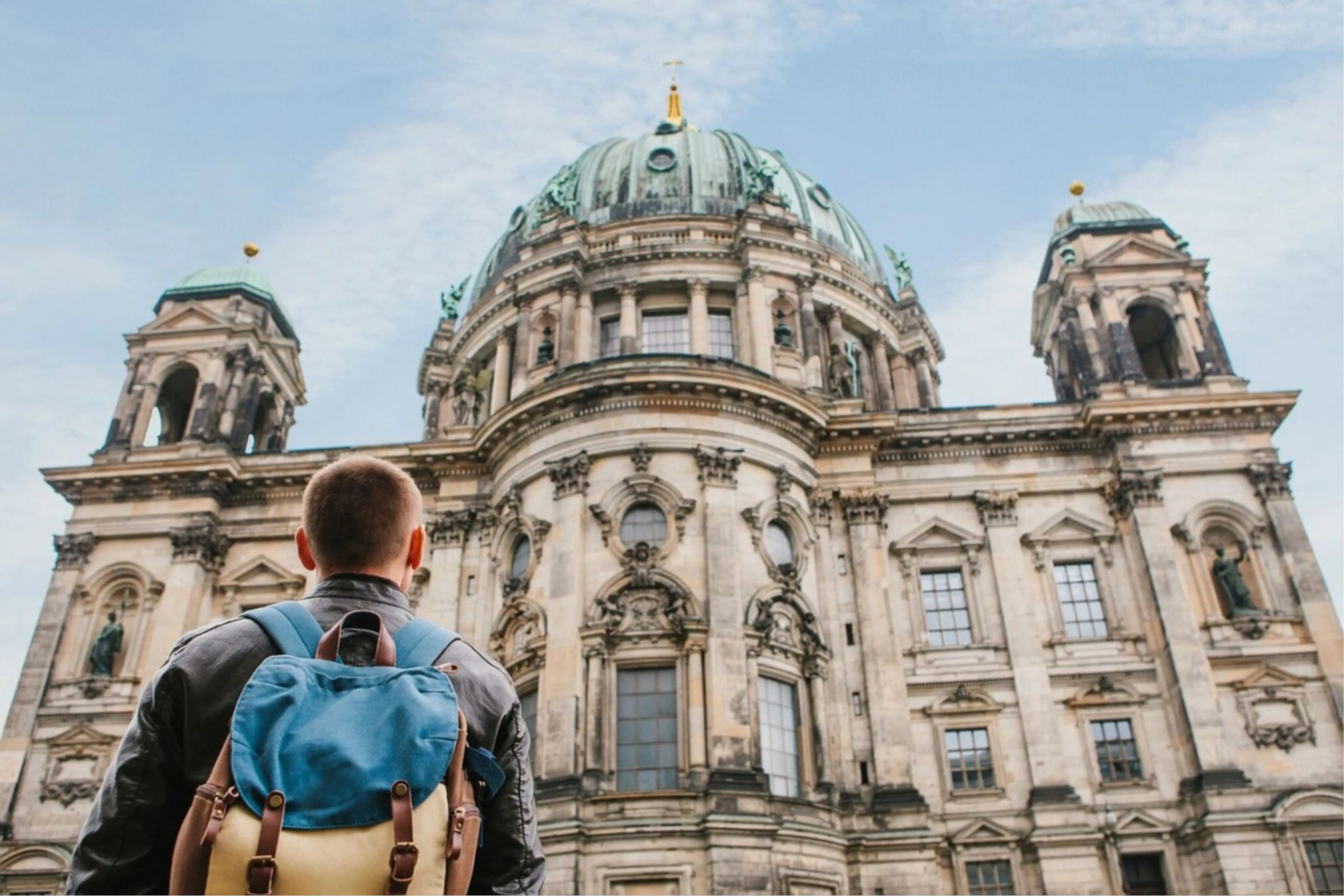
If you’re looking for a city that blends history, creativity, and everyday authenticity, this Berlin travel guide will help you experience it the right way. Berlin does not attempt to amaze with perfection. It instead attracts you with sincerity. Its avenues are literally laden with the traces of yesterday, but its energy feels modern and progressive.
The first impressions will come to your mind and be of a typical European metropolis, with huge edifices, full of people, and smooth tourist paths. Instead there was space, which I found. Wide streets. Open skies. Individuals who work at their own pace. The Berlin travel guide puts you at your own ease. And that is what makes it so memorable.
This manual isn't always about the real sightseeing but also about the city's features, what its sights are, what its districts are, and what the ordinary existence within the town is like.
To truly appreciate the city, you need some context about Berlin history. Such dramatic change has rarely been witnessed in the European capitals. Since the Prussians ruled up to the destruction of World War II and since the Cold War division to reunification, Berlin was always able to reinvent itself.
The best thing is that this history is still visible. Just a glimpse of the Berlin neighbourhoods Wall will be left between modern offices. You are going to pass through memorials constructed into normal streets.
Such candor is what defines the Berlin travel guide. It describes the high artistic culture, the focus on liberation, and the readiness to accept new ideas.
A well-planned Berlin travel guide must include the city’s major landmarks but with intention, not rush.
The Brandenburg Gate is more than an image stop; it symbolizes harmony. The Reichstag construction allows travelers to look out over the cities from its glass dome, representing transparency in today’s Germany. Museum Island gives global-elegance collections within walking distance of the River Spree.
These Berlin attractions are close enough to explore on foot. I will always advise being at the place early in the morning; the light is soft and the crowd is less. Strolling through sites enables you to inhale the air as opposed to checking boxes.
One of the most important parts of this Berlin travel guide is understanding Berlin neighborhoods. Every region is its own mini city.
Mitte is a logical place to start, in case it is the first time you visit. Many Berlin travel guide and urban attractions are found here large landmarks, museums, and government buildings. It is a convenient one, yet it may be rather hectic.
The culture of alternative has existed in Kreuzberg long enough. This district is expressed by street art, independent cafes, and a variety of food. It’s one of the best places for authentic Berlin cultural experiences.
With tree-covered streets and family-friendly cafés, Prenzlauer Berg gives a peaceful environment. It’s ideal for gradual mornings and weekend markets.
It is a neighborhood that balances both nightlife and everyday life. It is relaxed during the daytime. At night, it transforms.
By visiting other neighborhoods, you get a better idea of the city than by admiring central attractions.
Many travelers search online for “things to do in Berlin” and receive long lists of monuments. Visit a public park, such as Tempelhofer Feld, the former airport garden turned into an open area where people ride bicycles, picnic, and take some rest. Visit a weekly market. Go on a walking tour of street art or the Cold War. Visit bookstores and record shops that are independent.
Such Berlin travel guide experiences make you know what normal life is like, not only the tourist attractions.
The city of Berlin has one of the most powerful creative environments in Europe. Art galleries are located in industrial buildings turned into galleries. The music establishments include classical concert halls up to underground electronic clubs.
What makes Berlin travel guide cultural experiences unique is their accessibility. No art expert must tell you that you cannot enjoy them. There are a lot of free or cheap exhibitions. Surprisingly, there are performances in the street.
The city of Berlin travel guide welcomes the use of experimentation. This gives them an appealing air to artists worldwide, which keeps the air dynamic and fresh.
The food tradition in Berlin is multicultural. There are conventional German delicacies, but Turkish markets, Middle Eastern bakeries, and Asian avenue food are also well-known inside the city.
Cafés are social hubs. Local residents spend hours drinking coffee or brunching. Evenings usually start later on compared to other European cities, particularly on a weekend. Depending on when you go, this Berlin travel guide encourages flexibility. Berlin often rewards unplanned discoveries more than strict schedules.
Such minor components improve the perception and help you in being in the direction of local customs.
A lot of visitors attempt to fit everything within two days. Berlin is too stratified to do so. The other error is that one may only visit popular places, but not the neighborhoods.
This Berlin travel guide suggests balance: combine landmarks with local exploration. Leave space in your schedule. The beauty of the city tends to manifest itself in between scheduled visits.
Berlin is not a competition to draw attention; it provokes interest. Its sights are narratives, its quarters are characterful, and its daily existence is genuine as opposed to artificial. The secret of getting the best out of the city lies in moderation: combine big attractions with leisurely walks, Trivago combines tradition with creativity, and combine order with the unplanned. Giving room to make the unforeseen is what makes the Berlin travel guide more than a destination; it makes it personal and real.
Provided you like travel tips that are straightforward, simple, and well considered, you will get more of it at OrganizeTrip.