
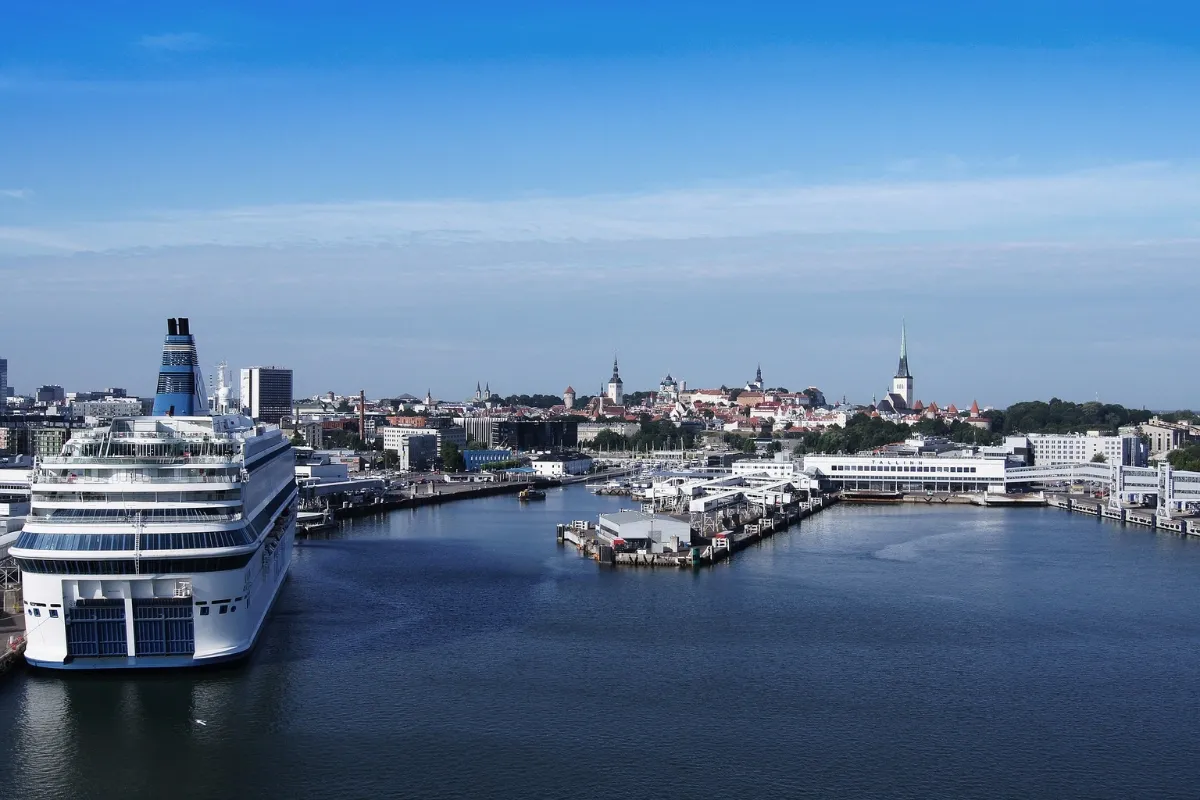
The sea has a way of making everything feel a little more magical. The slow pull aThe sea has a way of making everything feel a little more magical. The salty breeze in your hair. The initial sight of the coastline disappears into the distant horizon. The Europe ferry guide exists for you if you have ever considered exchanging confined airplane journeys for open spaces and moving ocean waves.
I always thought that travelling must be in the narrative and not the interval between the places. And honestly? There is no better way of making you feel more like a part of the continent than making the decision to travel Europe by ferry.
We are going to break into this Europe ferry guide and unload all the things you needed to know.
Europe was built for the sea. Ships were sewing nations together long before the budget airlines and trains that travel at high speed. Pure Europe ferry travel is still practised in a very comfortable and flexible manner today.
You get space to stretch. You can bring your car. You do not need to struggle through the long queues at the airports that seem to be like a sport. It would be dishonest of this Europe ferry guide not to say one thing: ferry transport is not necessarily the fastest one. But it is usually the most memorable. And when you go sightseeing in Europe, is that what it is?
Every time one imagines European ferry routes, they imagine Greek island hopping. And yes, that’s iconic. There is much more to the network.
You can sail:
Particularly some of these international ferry routes seem almost movie-like. Overnight cabins, silent lounges, regional food restaurants – it’s almost a mini cruise without the gilding on the walls.
When Europe ferry guide, I would always urge people to look at a map and to think differently. Suppose the sea is no obstacle – but rather a passage?
Let’s talk comfortably. Modern Europe ferry travel is nothing like the old images of wooden benches and wind-battered decks. Many ferries now offer:
Your Europe sea crossings might take an hour or overnight, depending on the distance.
My top ferry tips in Europe? Bring a small overnight bag, although you may have a car. Winding around in your trunk on a stormy deck is not the atmosphere.
When you are using this Europe ferry guide to plan your trip, time is of the essence.
Summer is the peak season. The Mediterranean routes, particularly, are filled very quickly. Autumn and spring are underestimated, though. Less traffic, less stressful prices, and yet beautiful weather. Indeed, even a few of the finest European ferry lines are almost luxurious when they are not congested.
It is also prudent to book long-distance international ferry routes in advance, especially when you are to travel by car or during holidays. Flexible tickets are also helpful in case you are a loose-planning traveller.
Another critical ferry tips in Europe ? Arrive early. The boarding processes are simpler than at the airports, but cars and pedestrians are loaded sequentially. Being the last to appear is a formula of stress.
The fact that people can bring their car to travel Europe by ferry is one of the reasons why many travellers like to travel by ferry. It opens doors to faraway coastal villages, countryside retreats and destinations that trains do not access easily.
However, you do not need a car at all. Foot traffic is also typical, particularly on the shorter Europe sea crossing. In most of the major ports, ferries are integrated with trains and buses.
In this Europe ferry guide, I will tell you it simply: both ways are alright. It depends on your style. Road trip soul? Bring the car. Light backpacker? Walk on and enjoy the ride.
The cost per way is different based on the route, time of the year, and the occupation of a cabin. It may cost a bit more than flights, but in comparison with that, Europe ferry travel may offer a bit more: flexibility in luggage, comfort, and an experience that is less stressful and usually more scenic.
It is even possible to substitute a hotel night with overnight crossings. That is a gimmick that experienced travelling people play on long international ferry routes.
One more useful observation made by this Europe ferry guide: it is easy but not necessarily cheap to have food on board. Both carrying snacks and a little picnic on deck would be most European.
Not all the routes taken by European trains are made up of transportation; some of them are experiences.
These crossing flights into the European sea provide a sight that cannot be experienced by flights. And when you decide to travel Europe by ferry, you are deciding to be immersed rather than to be fast.
Europe ferry travelling has a rhythm that is almost old-fashioned in the best way possible. It forces you to pause. To watch. To let the journey unfold.
This Europe ferry guide consists not only of logistics. It’s about perspective. The cultures of Europe have always been linked with the sea, and the modern boundaries have complicated the situation. And when you are at the deck and one nation fades away and the other slowly creeps on, you experience that past.
And in case you want to have a more relaxed and scenic and flexible method to see the continent, then this Europe ferry guide ought to persuade you that the sea may well be your best travel companion. Whether it is due to the awe-inspiring European ferry routes or memorable Europe sea crossings, the decision to travel with a ferry in Europe turns the journey into a destination.
And, regarding trusted operators flying between the UK, France, Spain, and Ireland, other companies such as Brittany Ferries have been keeping the ferry travel guide Europe comfortable and regular so far, which proves that there are some situations when the only right way is across the water.
For more practical travel tips, destination insights, and creative ways to experience Europe beyond the usual routes, visit OrganizeTrip.