
The outdoor trip will experience its worst interruption when you experience a poor sleep during the night. You can forgive soggy socks or burnt campfire toast but shivering till sunrise inside the wrong sleeping bag? Nope. It is the type of memory that sticks. Getting the correct sleeping bags is not only a matter of equipment but also comfort, security and waking up prepared to go on an adventure rather than spending time counting minutes before daylight.
I have done this too often, coiling myself like a human burrito in a sleeping bag that is too thin and asking myself why I did not think. The guide to sleeping bags requires no extra explanations because it will eliminate your sleep problems.
1. Know Your Adventure Style Before Buying a Sleeping Bag
To start with, what will you do with your sleeping bag? Camping with friends over the weekend is one thing, and trekking over the mountains in several days is another. When you are car camping, a spacious camping sleeping bag that has added padding is opulent. Backpacking? All the grams count now, and backpacking sleeping bags turn into your new best friend.
The outdoor sleeping bag which prioritizes comfort functions effectively for people who take informal trips. The portable sleeping bags which have a lightweight design, allow hikers and explorers to experience sunrise views, thus becoming essential equipment for outdoor adventures.
2. Temperature Ratings: The Make-or-Break Detail
Talking warmth now – because here people get most of the wrong. The sleeping bag ratings inform you about the minimum temperature with which the sleeping bag can work, but it is time to speak real words now: always choose warmer than you think. Cold sneaks up fast at night.
Cold weather sleeping bags are expensive but worth the money if you are camping in the cold areas or shoulder seasons. Summer campers? A comfortable sleeping bag with holes allows you to keep warm without feeling hot. Believe me, when one guesses wrong in such a situation, one is likely to have a long, queasy night of regrets and teeth-chattering.
3. Insulation Types: Down vs Synthetic Sleeping Bag
Insulation is important when selecting a sleeping bag. Down bags are warm, light, and well suited for backpacking sleeping bags. The downside? They don’t love moisture.
Synthetic insulation, however, is more resilient to damp conditions, and it dries quicker. It is perfect in case of a beginner or in bad weather. A lot of outdoor sleeping bags are made of synthetic fill, as it is durable and affordable, making it a solid generalist.
4. Shape and Fit: Yes, It Matters More Than You Think
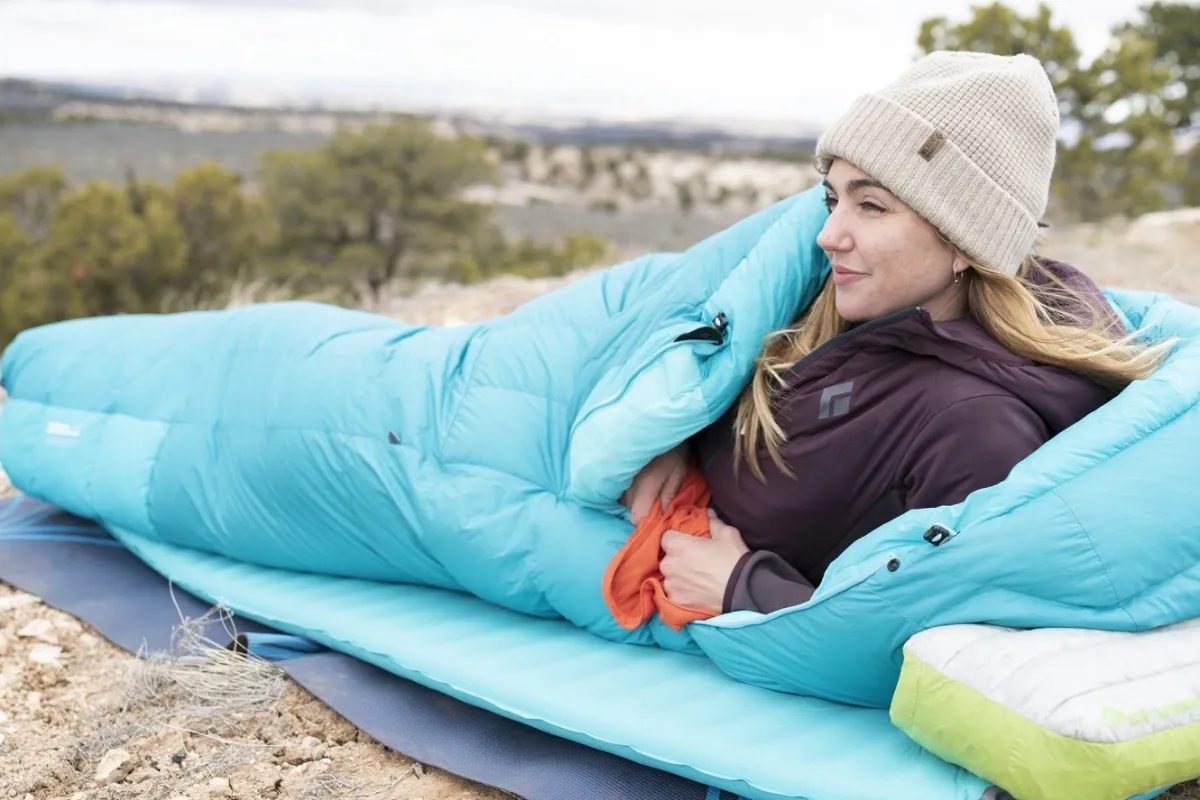
Did you ever have the feeling of being trapped in your sleeping bag, like a caterpillar in a chrysalis? Shape plays a big role. Bags resembling mummies snugly fit around your body and will trap heat, and they are good on cold nights and lightweight sleeping bags. Rectangular bags put space to sprawl and make the ideal camping sleeping bag setups.
Fit is personal. A tight sleeping bag will keep you warmer; however, when you toss and turn, having more room will make you sleep like a rock rather than pulling nylon through the night.
5. Weight and Packability for Backpackers
Your sleeping bag will be included in your survival kit in case you are hiking long distances. Heavy gear adds up fast. Here is where lightweight sleeping bags are shining; they are small, easy to carry, and do not make one feel that he/she is carrying a rock up the mountain.
Backpacking sleeping bags are a good compromise between warmth and weight for serious trekkers. You will be glad in mile number ten when your pack is still manageable.
6. Weather Resistance and Durability
Not every adventure is dusty and boring. Gear can be wettened by a dew, drizzle or sudden rain. The waterproof feature of outdoor sleeping bags creates a feeling of safety. The sleeping bag durability depends on your choice of outer clothes which need both strong materials and high-quality stitching to achieve maximum protection against wear.
Also, check zippers. A snagged zipper at midnight? That’s pure rage fuel.
7. Comfort Features You’ll Appreciate at 2 A.M.
Such trifles are all too much when you are half-asleep in the forest. Adaptable collars, hoods, and internal pockets – all these make a simple sleeping bag a comfortable cocoon. The design of some sleeping bags used in camping can even unzip completely and be used as a blanket, which is, to be frankly honest, chef's kiss in the morning when people enjoy sleeping lazily.
It is not an out-of-doors luxury to be comfortable but a life-preserving thing for your mood.
8. Budget Smart, Not Cheap
An investment is a sleeping bag. Inexpensive alternatives can be attractive, yet insulation and flimsy materials can ruin holidays within a short time. The advice in the best sleeping bag guide? Purchase what you can afford for the circumstances you will have most frequently.
There is no necessity to waste more money, and it is easy to cut corners in this case, but it is usually two times. A good sleeping bag is well worth the money for an excellent, good sleep and memorable morning.
9. Testing Your Sleeping Bag Before the Trip
Pro tip: do not wait until you are miles away from civilization to test your sleeping bag. Test it at home, on the balcony or when making a short overnight journey. You will soon know whether it is too warm, too tight, or alright.
Early breaking in of your sleeping bag also makes the sleeping bag loft well, particularly in the case of insulated fills.
The best sleeping bag is a matter of knowing yourself and what you will do at the end of the day. Cuddling down under the stars in a sleeping bag, hiking long distances using backpacking sleeping bags or facing the chill in cold-weather sleeping bags, the right sleeping bag makes the outing seem not like a matter of survival, but magic.
The right sleeping bag will allow you to wake up refreshed, to see the sunrise, and to take pleasure in that first cup of camp coffee. And once you are willing to consider an option that is reliable, comfortable, and affordable, you should consider what Decathlon can offer you because there should be nothing like bad sleep when you are outside.
For practical tips on choosing the right outdoor gear and planning stress-free adventures, visit OrganizeTrip.