
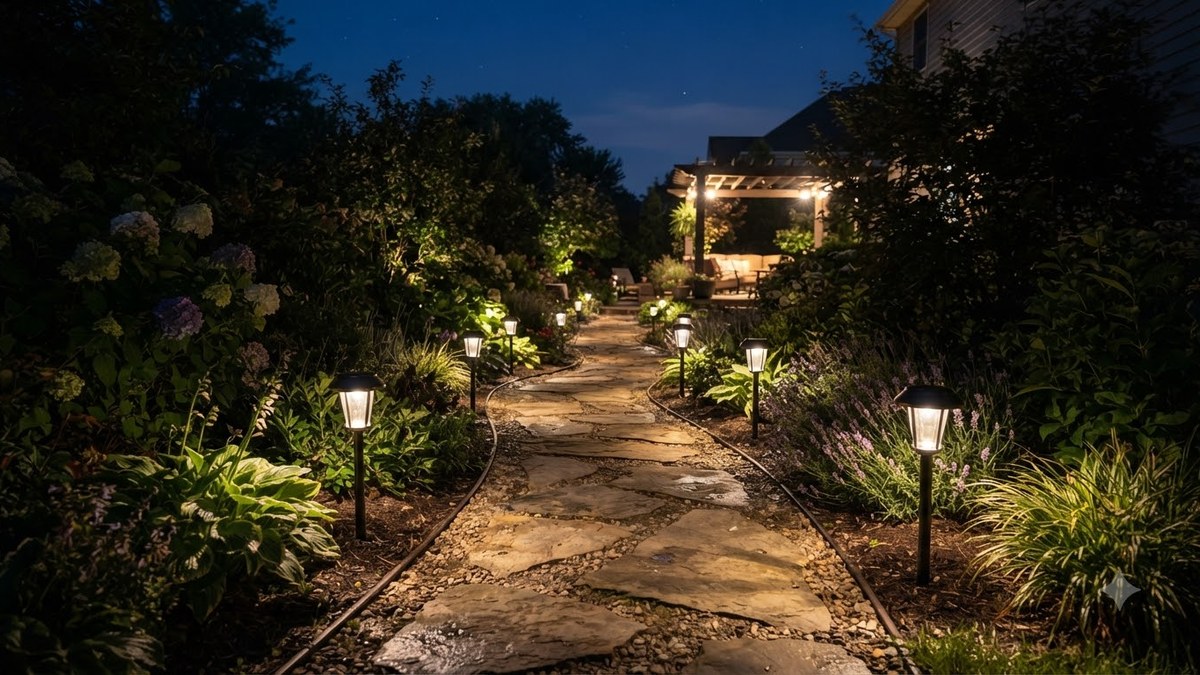
A dark garden path is a trip hazard eleven months of the year and a nuisance the twelfth. Running mains cable out to it means a trench, an electrician and a bill; solar pathway lights need a spike, a patch of daylight and nothing else. That trade is why they have taken over, and why the range is now wide enough to be confusing.
How much direct sun does the spot actually get? Not how bright it feels — how many hours of unshaded sun. A light under a hedge will charge for two hours and die by nine o'clock regardless of what the listing claims.
Do you want light on the path or light in the garden? Path lights throw down onto the ground. Deck and step lights wash a surface. Decorative stake lights do neither particularly well but look better from a window.
How many do you need? Spacing is the mistake people make. Lights at four-metre intervals read as a dotted line rather than a lit path, so buy the larger multipack and space them at two.
What is the weather rating? Anything outdoors year-round needs a proper ingress rating, not just the word waterproof in the title.
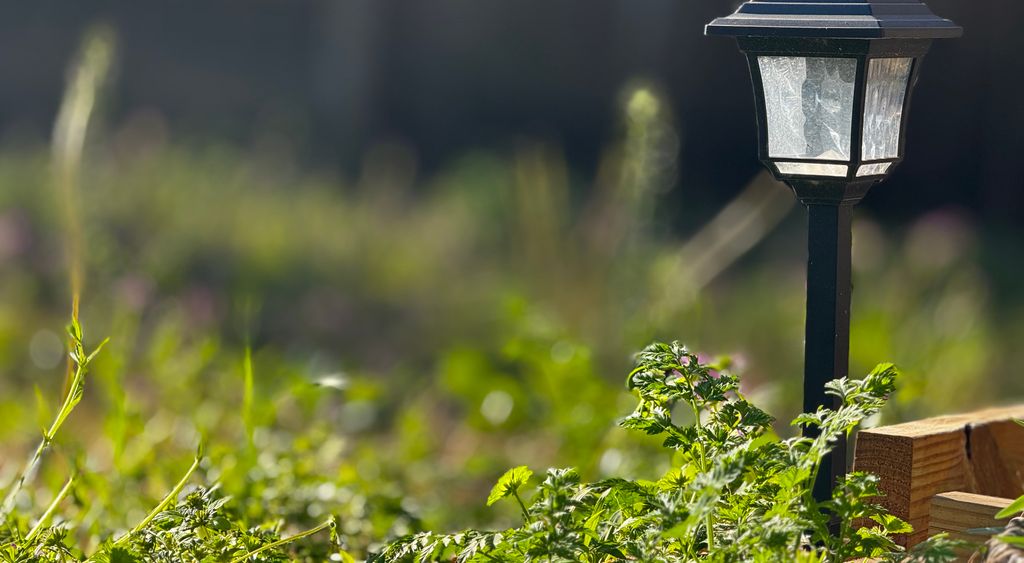
These span path spikes, deck fittings and decorative stakes across the outdoor solar garden lights category.
Flat fittings that screw to a step riser, a deck edge or a fence post rather than pushing into soil. The large count is the point — deck lights are meant to be repeated along an edge, and a run of sixteen reads as deliberate lighting where four reads as leftovers.
Classic path spikes with a dusk sensor, so they come on without a timer to set or reset when the clocks change. Twelve is enough for a decent run of path at sensible spacing.
The same deck-light idea sold in three pack sizes, which is useful when you are lighting one short flight of steps rather than a whole deck. Buying eight for a job that needs eight beats buying thirty-two and storing the rest.
The set with a stated ingress rating, and a 700mA cell behind it. IP55 covers rain from any direction, which is the realistic year-round requirement for something standing in a border. Pick this one if the lights will not be brought in over winter.
Decorative rather than functional, with each bulb on a flexible stem so the cluster moves in wind. These are for looking at from indoors, not for finding your way to the bins.
The head tilts, which sounds minor and is not. An adjustable head lets you aim light along a path instead of straight down at the spike, so fewer units cover the same ground.
Wipe the panels every few weeks. A film of dust or pollen costs more charge than a cloudy day does, and it is the single reason most solar garden lights fade by their second summer.
Site the panel, not the light. If the fitting has a separate panel on a lead, put the panel in sun and the light where you need it — that combination beats compromising on both.
Push spikes in wet ground, not dry. Forcing a plastic spike into baked summer soil is how they snap; water the spot first and it goes in cleanly.
Count the run and buy for two-metre spacing, check the sun hours honestly, and take the rated set if the lights stay out all winter. Deck fittings for edges, spikes for borders, firefly stems for the view from the kitchen window.
The whole range is listed on Temu, where the pack sizes and ratings are set out so you can match a set to the length of path you are lighting.
Garden and outdoor coverage continues on OrganizeTrip, including seasonal lighting as the nights draw in.